
By Dr Nicole Rous
Changes in behaviour are one of the more common concerns we see in general practice. Dogs may become more reactive, anxious, restless, or difficult to settle, and understandably, owners often look for a clear cause.
In some cases, behaviour changes are primarily related to environment, learning, or routine. In others, there may be an underlying medical or physiological contributor.
One area receiving increasing attention is the relationship between gut health and behaviour, often referred to as the gut–brain axis.

What is the gut–brain axis?
The gut–brain axis describes the two-way communication between the gastrointestinal tract and the central nervous system.
This communication occurs through several pathways, including:
-
The nervous system (particularly the vagus nerve)
-
Hormonal signalling
-
Immune system activity
-
Microbial metabolites produced by gut bacteria
The gut microbiome, the population of bacteria and other microorganisms living in the digestive tract, plays a role in many of these processes.
In both human and veterinary medicine, research is exploring how this system may influence mood, stress responses, and behaviour.
Does gut health cause behaviour changes?
This is where it’s important to stay balanced.
While there is growing interest in the gut–brain axis, it would be an oversimplification to say that gut issues directly cause anxiety or behavioural problems in most dogs.
What we do see clinically is that:
-
Some dogs with chronic digestive issues also show increased stress sensitivity
-
Dogs with skin disease or inflammation may have overlapping gut health concerns
-
Chronic discomfort (including gastrointestinal discomfort) can influence behaviour
So rather than a direct cause-and-effect relationship, it is more accurate to think of gut health as one piece of a larger picture.
When might gut health be relevant?
In practice, we are more likely to consider gut health as a contributing factor when behavioural changes occur alongside other signs, such as:
-
Ongoing soft stools or diarrhoea
-
Bloating or flatulence
-
Skin flare-ups or recurrent infections
-
Changes in appetite
-
Poor tolerance to diet changes
In these cases, investigating gastrointestinal health may be worthwhile, not just for digestion, but for overall well-being.

What about probiotics and supplements?
There is increasing discussion around probiotics, “psychobiotics”, and calming supplements for dogs.
The evidence varies.
Some probiotic strains have been shown in early studies to influence stress-related pathways, and certain supplements may support relaxation or recovery after stress. However:
-
Results are inconsistent between individual dogs
-
Not all products contain clinically relevant strains or doses
-
Effects are typically subtle rather than dramatic
In clinic, we tend to view these as supportive tools, rather than primary treatments for behavioural issues.
When supplements may help
Calming or gut-focused supplements may be useful in dogs who:
-
Have mild to moderate stress or anxiety
-
Experience predictable stressors(e.g. travel, visitors, noise events)
-
Have concurrent digestive signs
-
Are already on a broader behavioural or medical plan
They are generally not sufficient on their own for:
-
Severe anxiety
-
Aggression
-
Long-standing behavioural disorders
-
Pain-related behaviour changes
In clinic, we recommend Shy Tiger’s Stress Supplement which is a gut-brain axis focused supplement. It has become a part of many dogs’ calming routine.
When to consider further investigation
If your dog’s behaviour has changed, it’s important not to assume it is purely behavioural.
A veterinary assessment is recommended if you notice:
-
Sudden or significant behaviour changes
-
Signs of pain or discomfort
-
Digestive issues alongside behavioural concerns
-
Sleep disruption, pacing, or restlessness
-
Changes in appetite or weight
Depending on the case, this may involve:
-
A full clinical exam
-
Pain assessment
-
Dietary review
-
Behavioural history
-
In some cases, further diagnostics such as blood tests or gut health assessment
Where gut microbiome testing fits
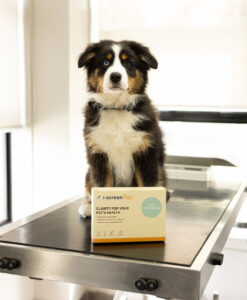
Gut microbiome testing is an emerging tool that can provide additional information about the bacterial populations within the gastrointestinal tract.
In some dogs particularly those with chronic digestive issues, recurrent skin disease, or complex cases, this may help guide more targeted nutritional or supportive strategies.
However, it is not necessary for every patient, and results should always be interpreted in the context of the individual dog.
We recommend the i-screenPets Gut Microbiome Test.
A practical approach
When we approach behaviour concerns in clinic, we generally consider:
-
Environment and routine
-
Training and behavioural history
-
Physical health and pain
-
Diet and digestive health
-
Stress triggers and predictability
Gut health may be one part of that assessment, but it is rarely the only factor.
Final thoughts
The relationship between gut health and behaviour is an evolving area of veterinary medicine.
While the gut–brain axis is a real and important system, it is best viewed as part of a broader, integrated approach to your dog’s health.
If your dog is showing signs of anxiety or behavioural change, the most helpful step is often a structured veterinary assessment to understand what factors may be contributing and where support is likely to be most effective.
In some cases, improving gut health can play a role. In others, different interventions will be more appropriate.
The goal is always the same: helping your dog feel more comfortable, stable, and able to cope with their environment.
Should you wish to book a consultation with one of our veterinarians please book one here.