
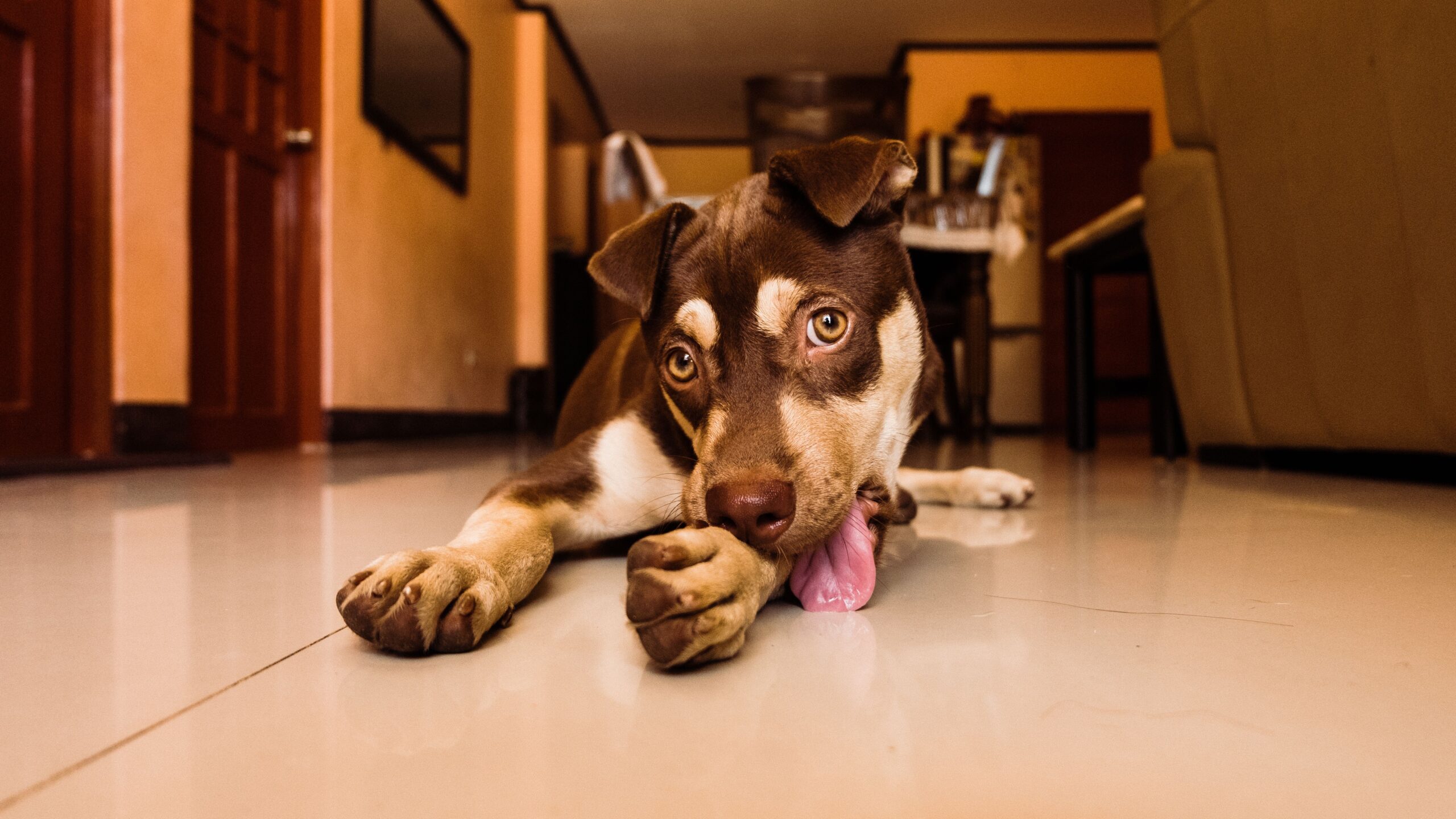
Why Is My Dog Always Licking Their Paws?
A veterinarian explains the common causes of excessive paw licking and when it’s time to seek help
By Dr Nicole Rous
Many dogs lick their paws from time to time. A quick clean after a walk or a little grooming before settling down is perfectly normal.
However, if your dog seems to be constantly licking, chewing or biting at their paws, it’s worth paying attention. Persistent paw licking is often a sign that something is causing irritation or discomfort rather than simply being a habit.
At Vets of Melbourne, excessive paw licking is one of the most common concerns we hear from dog owners. The good news is that identifying the underlying cause can often help improve both your dog’s comfort and their long-term health.
Why do dogs lick their paws?
Dogs may lick their paws for many different reasons, and sometimes more than one factor is involved.
Common causes include:
-
Environmental allergies
-
Food sensitivities
-
Skin infections
-
Parasites
-
Injuries or foreign objects
-
Pain or arthritis
-
Behavioural factors such as boredom or anxiety
Rather than focusing solely on stopping the licking, it’s important to understand why it’s happening.
Allergies are one of the most common causes
One of the leading causes of chronic paw licking is allergic skin disease.
Dogs can develop allergies to environmental triggers such as grasses, pollens, moulds and dust mites. These allergies often cause inflammation of the skin, particularly around the feet, ears, face and abdomen.
Signs of allergies may include:
-
Red or inflamed paws
-
Brown saliva staining on the fur
-
Frequent licking or chewing
-
Recurrent ear infections
-
Itchy skin
-
Rubbing the face on furniture or carpet
Because allergies are usually ongoing conditions, many dogs require long-term management rather than a one-off treatment.
Could it be a skin infection?
Constant licking creates warmth and moisture between the toes, making it easier for bacteria and yeast to grow.
Once an infection develops, it often becomes even itchier, creating a frustrating cycle where licking leads to infection, which then causes even more licking.
Your veterinarian may recommend skin cytology to identify whether bacteria or yeast are contributing to your dog’s symptoms.
Don’t forget to check for injuries
Sometimes the cause is much simpler.
Grass seeds, splinters, cuts, cracked paw pads or even small stones caught between the toes can cause sudden discomfort.
If your dog begins licking one paw intensely after a walk, it’s worth checking for obvious injuries. If you can’t find the cause or your dog appears painful, a veterinary examination is recommended.
Could gut health play a role?
Research into the gut-skin axis is an exciting and rapidly evolving area of veterinary medicine.
The gut microbiome plays an important role in immune function, and researchers are investigating how changes in the gut microbiome may influence inflammatory skin conditions in some dogs.
While gut health is unlikely to be the sole cause of itchy paws, it may be one factor contributing to overall skin health in certain cases.
At Vets of Melbourne, we may recommend i-screenPets gut microbiome testing for selected dogs with ongoing skin or digestive concerns as part of a broader investigation into their health. Microbiome testing doesn’t replace a veterinary work-up, but it can provide valuable insights that help guide personalised care.
Can stress cause paw licking?
Sometimes.
Dogs experiencing stress or anxiety may develop repetitive behaviours, including paw licking.
However, behavioural causes should generally be considered only after medical conditions have been ruled out. Many dogs initially thought to be “licking because they’re anxious” are actually experiencing underlying allergies, pain or skin disease.
When should you see your vet?
It’s a good idea to book an appointment if your dog:
-
Licks their paws every day
-
Has red, swollen or bleeding paws
-
Develops an unpleasant smell between the toes
-
Is limping or reluctant to walk
-
Has recurring ear infections or itchy skin
-
Continues licking despite home care
The earlier the underlying cause is identified, the easier it is often to manage.
How are itchy paws treated?
Treatment depends entirely on the underlying cause.
Your veterinarian may recommend:
-
Allergy management
-
Treatment for bacterial or yeast infections
-
Parasite prevention
-
Removal of foreign material
-
Pain assessment if arthritis or injury is suspected
-
Dietary changes where appropriate
-
Further investigation into chronic skin or digestive issues
The goal isn’t simply to stop the licking—it’s to address what’s causing the discomfort in the first place.
Final thoughts
Paw licking is one of those behaviours that’s easy to dismiss as “just something dogs do,” but persistent licking is often your dog’s way of telling you something isn’t quite right.
Whether the cause is allergies, infection, injury or another underlying health issue, identifying the reason early can help prevent ongoing discomfort and improve your dog’s quality of life.
If your dog’s paw licking has become frequent or persistent, speak with your veterinarian. A thorough assessment can help determine the cause and develop a treatment plan that’s tailored to your dog’s individual needs.