
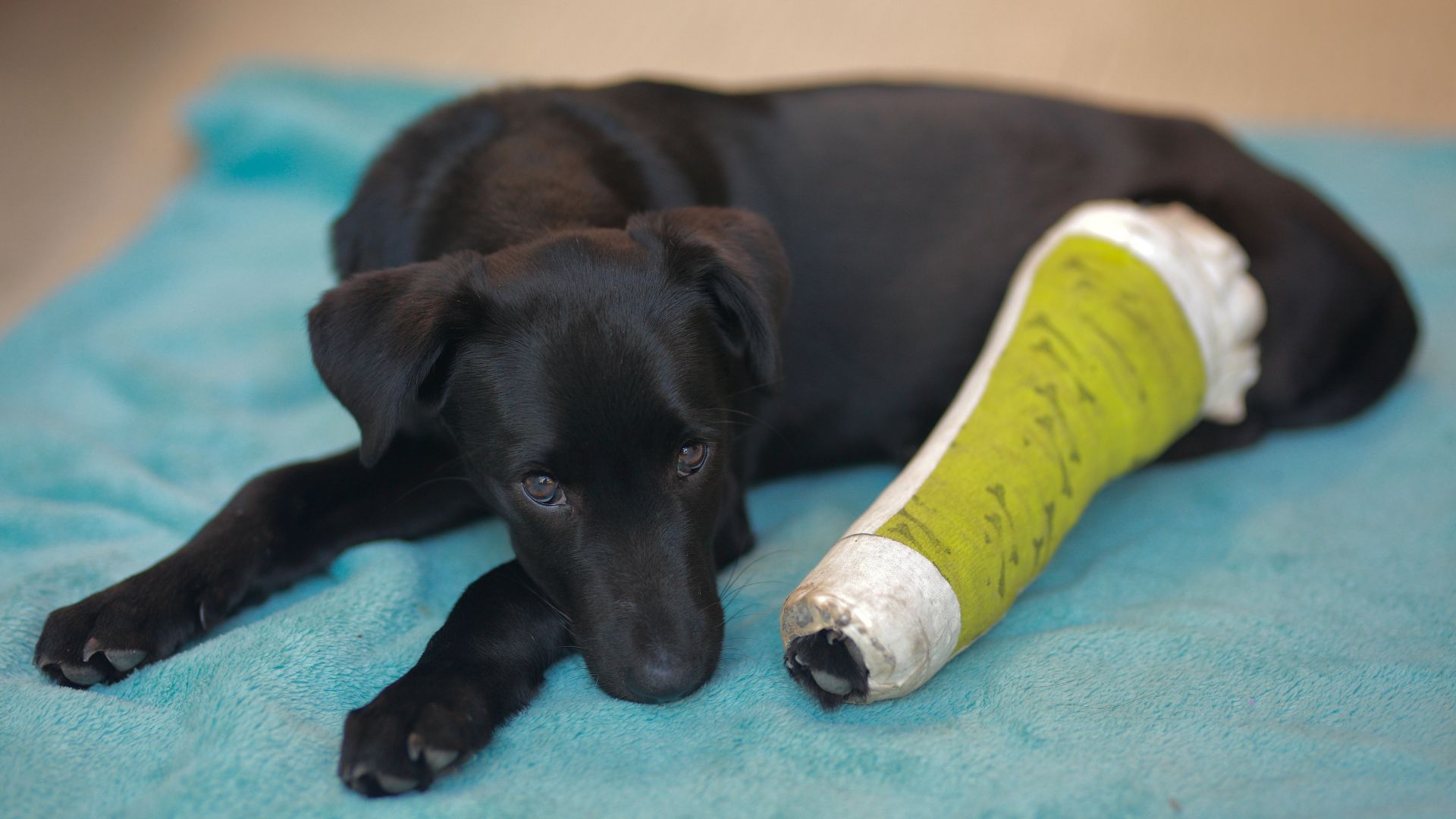
Expert diagnosis and orthopaedic treatment to help your pet recover from broken bones safely and comfortably.
Limb Fracture Treatment
A limb fracture can be a painful and distressing injury for both pets and their owners. Whether caused by an accident, fall or other trauma, broken bones require prompt veterinary assessment to relieve pain, prevent further injury and support proper healing.
At Vets of Melbourne, we provide comprehensive diagnosis and treatment for limb fractures in dogs, cats and selected small animals. Our experienced veterinary team will assess your pet’s injury and develop a personalised treatment plan to restore comfort, mobility and quality of life.
What Is a Limb Fracture?
A limb fracture occurs when one or more bones in the front or hind leg break or crack. Fractures can range from simple breaks that remain stable to more complex injuries involving multiple bone fragments or surrounding soft tissues.
The type and severity of the fracture will determine the most appropriate treatment for your pet.
Signs Your Pet May Have a Broken Limb
A pet with a fractured limb will often show obvious signs of pain and reduced mobility.
Common signs include:
- Limping or inability to bear weight
- Swelling around the injured limb
- Pain when the leg is touched
- Holding the leg off the ground
- An abnormal angle or appearance of the limb
- Reluctance to walk or move
- Crying, whimpering or signs of distress
- Reduced appetite following an injury
If you suspect your pet has fractured a limb, seek veterinary care as soon as possible. Early assessment can help minimise pain and improve treatment outcomes.
Why Choose Vets of Melbourne for Limb Fracture Treatment?
When your pet suffers a broken bone, you want experienced veterinary care you can trust. At Vets of Melbourne, we combine modern diagnostic imaging, advanced orthopaedic techniques and personalised aftercare to support the best possible recovery.
Our team is committed to guiding you through every stage of your pet’s treatment—from diagnosis and surgery to rehabilitation and returning to normal activities.
Book an appointment with Vets of Melbourne if you believe your pet has suffered a limb fracture or is showing signs of pain, swelling or difficulty walking.
Signs Your Pet May Have a Broken Limb
A pet with a fractured limb will often show obvious signs of pain and reduced mobility.
Common signs include:
- Limping or inability to bear weight
- Swelling around the injured limb
- Pain when the leg is touched
- Holding the leg off the ground
- An abnormal angle or appearance of the limb
- Reluctance to walk or move
- Crying, whimpering or signs of distress
- Reduced appetite following an injury
If you suspect your pet has fractured a limb, seek veterinary care as soon as possible. Early assessment can help minimise pain and improve treatment outcomes.
Recovery After Limb Fracture Treatment
Healing after a fracture takes time and requires careful home management.
Your pet’s recovery plan may include:
- Strict exercise restriction
- Pain relief medications
- Regular recheck appointments
- Follow-up X-rays to monitor bone healing
- Gradual return to activity
- Rehabilitation exercises where appropriate
We’ll provide detailed aftercare instructions and support you throughout your pet’s recovery.
For more information on caring for your pet after surgery, including activity restriction, wound care and follow-up appointments, please visit our After-Surgery Care page.
Frequently Asked Questions
What should I do if I think my pet has broken a leg?
Keep your pet as still as possible and contact your veterinarian immediately. Avoid attempting to straighten or splint the limb yourself, as this may worsen the injury.
Will my pet need surgery?
Not all fractures require surgery. Some stable fractures can be managed with splints or casts, while others require surgical repair to restore proper alignment and function. We’ll recommend the most appropriate treatment based on your pet’s injury.
How are limb fractures diagnosed?
Most fractures are diagnosed using a physical examination and digital X-rays. These images allow us to assess the location, severity and complexity of the fracture.
How long does it take for a fracture to heal?
Healing time varies depending on your pet’s age, the type of fracture and the treatment provided. Many fractures require several weeks of restricted activity, followed by a gradual return to normal exercise.
Can my pet make a full recovery?
Many pets recover very well following appropriate fracture treatment and rehabilitation. Early diagnosis, proper surgical care where required and following your veterinarian’s recovery instructions all contribute to a successful outcome.